Watercolor Kitchen Spice Rack Clipart Review
As a designer who has spent years translating digital files into tangible thread, I approach every new asset with a critical eye. When I first opened the Watercolor Kitchen Spice Rack Clipart, my immediate reaction was to appreciate its whimsical charm. It falls squarely within the Illustrations category, offering a soft, artistic vibe that stands out against the rigid lines often found in traditional embroidery patterns. However, moving from a pretty image on a screen to a stitched reality requires more than just aesthetic appreciation; it demands a practical understanding of how watercolor textures translate into stitch density and fabric interaction.
The First Impression: Softness Meets Structure
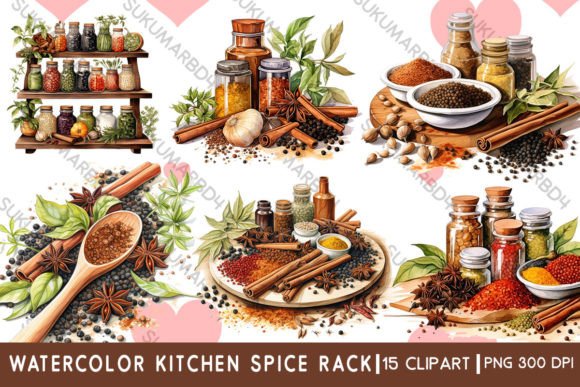
The visual personality of this design is undeniably cozy. The watercolor effect suggests a blend of colors that bleed into one another, creating a sense of organic movement. For an embroidery project, this mood is perfect for home decor or lifestyle branding. Imagine preparing a custom embroidered tote bag for a local artisan market. The Watercolor Kitchen Spice Rack Clipart would instantly signal "handmade" and "homey," appealing directly to customers looking for personalized gifts or boutique kitchen items. The layout feels balanced, with the spice jars arranged in a way that guides the eye without feeling cluttered. Yet, as any experienced maker knows, the challenge lies in replicating those soft gradients using satin stitch, fill stitch, or running stitch techniques.
Real-World Application: From Tote Bags to Aprons
Let's talk about a specific scenario. I recently considered using this design for a series of heavy-duty cotton aprons intended for a small shop product line. The goal was to create a high-value finished product that felt both professional and approachable. In this context, the Watercolor Kitchen Spice Rack Clipart shines. On a textured fabric like canvas or duck cloth, the slight irregularities of the watercolor style can actually mask minor stitching imperfections, making the final result look intentionally artistic rather than mechanically precise.
For custom apparel, such as a sweatshirt or a tea towel, the design offers versatility. If you are an Etsy seller looking to expand your holiday embroidery collection, this clipart fits perfectly into a "cozy kitchen" theme. It works exceptionally well as a focal point on a pillow cover or as a decorative accent on a baby item, provided the scale is adjusted correctly. The key is ensuring that the soft edges of the watercolor effect do not get lost in the background noise of the fabric texture. When used on a dark fabric, you must carefully select thread colors to maintain contrast, otherwise, the delicate details might disappear under the stitches.
Navigating Fabric Challenges and Hoop Sizes
While the design is beautiful, there are scenarios where caution is required. If you attempt to use the Watercolor Kitchen Spice Rack Clipart on thin or stretchy fabric, the density of the fill stitch could cause puckering. This is a common pitfall when working with detailed illustrations. Always test the design on scrap fabric first to gauge the tension. Furthermore, if you are planning to embroider this on a curved surface like a cap, the intricate details of the spice rack might distort. The watercolor splashes, which rely on smooth transitions, can become muddy if the hoop size is too small or if the stabilizer is insufficient.
Small hoop sizes are another area of concern. The charm of this illustration comes from its fluidity, but shrinking it down to fit a 4x4 inch hoop can turn those beautiful gradients into a block of thread. You need enough space for the needle to create the necessary layering of colors. If you are creating an embroidered patch, ensure the digitization allows for clean cutlines around the softer edges. Without proper attention to these details, the finished product may lack the crispness needed for commercial embroidery projects.
Design Integrity and Visual Appeal
The success of any machine embroidery design hinges on how well it communicates quality. The Watercolor Kitchen Spice Rack Clipart has the potential to elevate a handmade product from a simple craft to a premium gift. Customers trust brands that pay attention to detail. When they see a well-executed design on a personalized gift, their perception of value increases. However, this relies heavily on the execution. If the stitch density is too high, the fabric will feel stiff; too low, and the colors won't pop. Finding that balance is crucial for maintaining brand consistency across your digital product previews and physical goods.
Consider the impact on buyer engagement. A unique, artistic design like this can set your listings apart from generic floral or geometric patterns. It tells a story. For a craft business, having a cohesive set of design assets that share this watercolor aesthetic can build a recognizable brand identity. Whether you are selling printable mockups or actual stitched items, the visual appeal drives the initial click. But it is the quality of the stitch work that secures the sale and encourages repeat business.
Practical Notes for the Professional Designer
Before committing to a full production run, follow these essential steps. First, always review the stitch count and file compatibility. Since specific technical details were not provided in the product description, you must verify the embroidery file format matches your machine. Check whether the design includes separate layers for the watercolor effects or if it relies on a single complex fill. This distinction matters significantly for thread color management.
Second, conduct a black and white mockup test. Sometimes, what looks colorful on screen loses definition in grayscale, which can be an issue for certain fabric types or lighting conditions. Third, confirm the licensing terms. As a creative entrepreneur, you need to know if you can sell the finished products commercially or if the license restricts you to personal use. This is vital for any small shop owner planning to list items on Etsy or at a craft fair.
Finally, invest in the right stabilizer. Watercolor designs often require a tear-away or cut-away stabilizer that supports the weight of the thread without adding bulk. Test different thread colors to see how they interact with the base fabric. Light fabrics might require a lighter palette to keep the airy feel, while darker backgrounds could benefit from brighter, contrasting hues to highlight the spice rack details.
Final Verdict for Your Next Project
The Watercolor Kitchen Spice Rack Clipart is a strong contender for designers looking to add a touch of artistic flair to their portfolio. It is not just a pattern; it is a statement piece that can transform a plain sweatshirt, a simple apron, or a standard tote bag into something special. By respecting the limitations of the medium and testing thoroughly, you can harness the full potential of this illustration. Whether you are a hobbyist making holiday gifts or a professional decorator fulfilling a large order, this design offers a fresh perspective on kitchen-themed embroidery. Just remember: the magic happens not in the download, but in the careful, thoughtful stitching that follows.