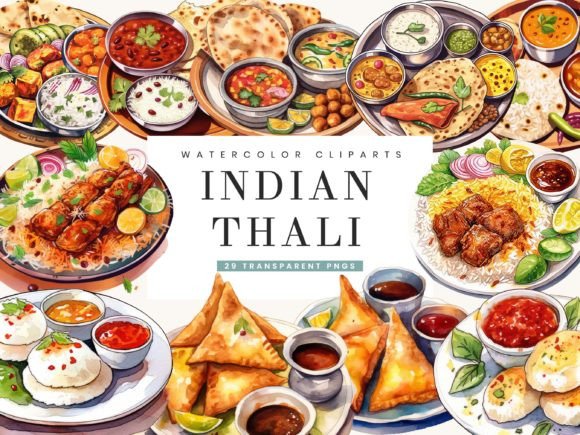
Watercolor Indian Thali Clipart Bundle – A Designer’s Review for Real Client Projects
As a graphic designer working with small businesses, handmade brands, and local creatives, I’m always on the lookout for design assets that add character without compromising professionalism. Recently, I came across the Watercolor Indian Thali Clipart Bundle and decided to put it through a real-world design test for a client project centered around a new line of artisanal Indian spices.
First Impressions: Warm, Organic, and Rich in Cultural Nuance
The moment I opened the bundle, I was struck by the soft, hand-painted textures and the warm, earthy tones that evoke traditional Indian cuisine and hospitality. The clipart features various thali elements – plates, bowls, cutlery, and condiments – all rendered in a loose, watercolor style that feels both authentic and modern. It’s not overly stylized, which makes it versatile for a range of design directions.
This isn’t just another clipart set; it’s a graphic design asset with a clear cultural identity. The illustrations carry a sense of storytelling and craftsmanship that resonates well with handmade businesses, Etsy sellers, and local food entrepreneurs looking to highlight authenticity in their brand identity.
Putting It to Work: From Packaging to Social Media
For the spice brand project, I used the Watercolor Indian Thali Clipart Bundle across multiple touchpoints:
- Packaging design: The clipart worked beautifully on product labels, especially when paired with a clean sans-serif font. The organic lines added warmth without overwhelming the product information.
- Social media graphics: On Instagram posts and Pinterest pins, the watercolor elements stood out against light backgrounds, drawing attention to seasonal promotions and recipe cards.
- Printable designs: For downloadable recipe cards and menu templates, the clipart added a decorative yet unobtrusive touch that elevated the overall look.
- Website graphics: Used sparingly in hero sections and section dividers, the illustrations gave the site a handcrafted feel without slowing down load times.
In each case, the illustrations helped reinforce the brand’s narrative of tradition and care in food preparation. The client was thrilled with how the visuals connected emotionally with their audience, especially those familiar with Indian culture.
Where It Shines: Design Scenarios That Benefit Most
The Watercolor Indian Thali Clipart Bundle truly excels in projects that call for a human, artisanal touch. Here are some ideal applications:
- Themed collections: Perfect for seasonal campaigns, cultural festivals, or regional food promotions.
- Product mockups: Adds charm to packaging mockups for print-on-demand sellers and Etsy shops.
- Editorial design: Ideal for food blogs, recipe books, and cultural magazines that want a soft, hand-drawn aesthetic.
- Merchandise design: Works well on tote bags, mugs, and t-shirts when used as a supporting design element.
- Canva templates: Easy to integrate into digital design tools for non-designers creating branded content.
Where to Use It Carefully: Limitations to Be Aware Of
Despite its charm, this design bundle isn’t universally applicable. Here are some situations where I recommend caution:
- Small sizes: The fine watercolor textures can get lost on tiny stickers or social media avatars.
- Crowded layouts: In complex designs with multiple visual elements, these illustrations can become distracting.
- Low-contrast settings: On dark or patterned backgrounds, the soft colors may not stand out enough.
- Minimalist branding: If the brand direction is sleek and modern, this style might feel out of place.
- Corporate materials: Annual reports or professional presentations may not benefit from the casual, organic feel of these graphics.
Impact on Branding and Visual Communication
From a branding standpoint, the Watercolor Indian Thali Clipart Bundle brings a strong emotional appeal. It enhances audience engagement by tapping into cultural familiarity and visual warmth. However, it also requires careful handling to maintain brand consistency and readability.
When used appropriately, these illustrations elevate the design’s professionalism and add a layer of visual trust. But overuse can muddy the visual hierarchy and dilute the brand message. As with any creative design element, balance is key.
Designer’s Checklist: What to Test Before Final Use
Before deploying the Watercolor Indian Thali Clipart Bundle in a client project, here’s what I recommend testing:
- Test in black and white: See how the illustrations hold up if color is removed, especially for print projects.
- Check contrast on different backgrounds: Ensure visibility on both light and dark themes.
- Preview at multiple sizes: Confirm clarity on both large posters and small digital thumbnails.
- Place on real mockups: See how the clipart integrates with actual product designs and packaging.
- Test print quality: Print a sample to verify color accuracy and resolution.
- Review file formats: Confirm availability of SVG, PNG, and vector formats for flexibility.
- Inspect PNG transparency: If using on layered designs, make sure the transparency is clean.
- Compare with different fonts: Pair with serif, sans serif, and script fonts to see which combinations feel most cohesive.
- Confirm commercial licensing: Always double-check the license terms, especially for print-on-demand or Etsy product use.
Final Thoughts: A Valuable Creative Marketplace Find
The Watercolor Indian Thali Clipart Bundle is a strong contender for designers working with food, lifestyle, or culture-based brands. It bridges the gap between traditional illustration and modern design, offering a flexible tool that enhances visual storytelling.
As a digital product, it’s well-suited for Cricut projects, sticker design, and social media graphics, and it has the potential to support a wide range of commercial design applications when used thoughtfully.
If you’re a small business owner, marketer, or designer looking to add cultural depth and artisanal charm to your visuals, this design asset is worth considering – especially when paired with a clear design strategy and tested across real-world use cases.